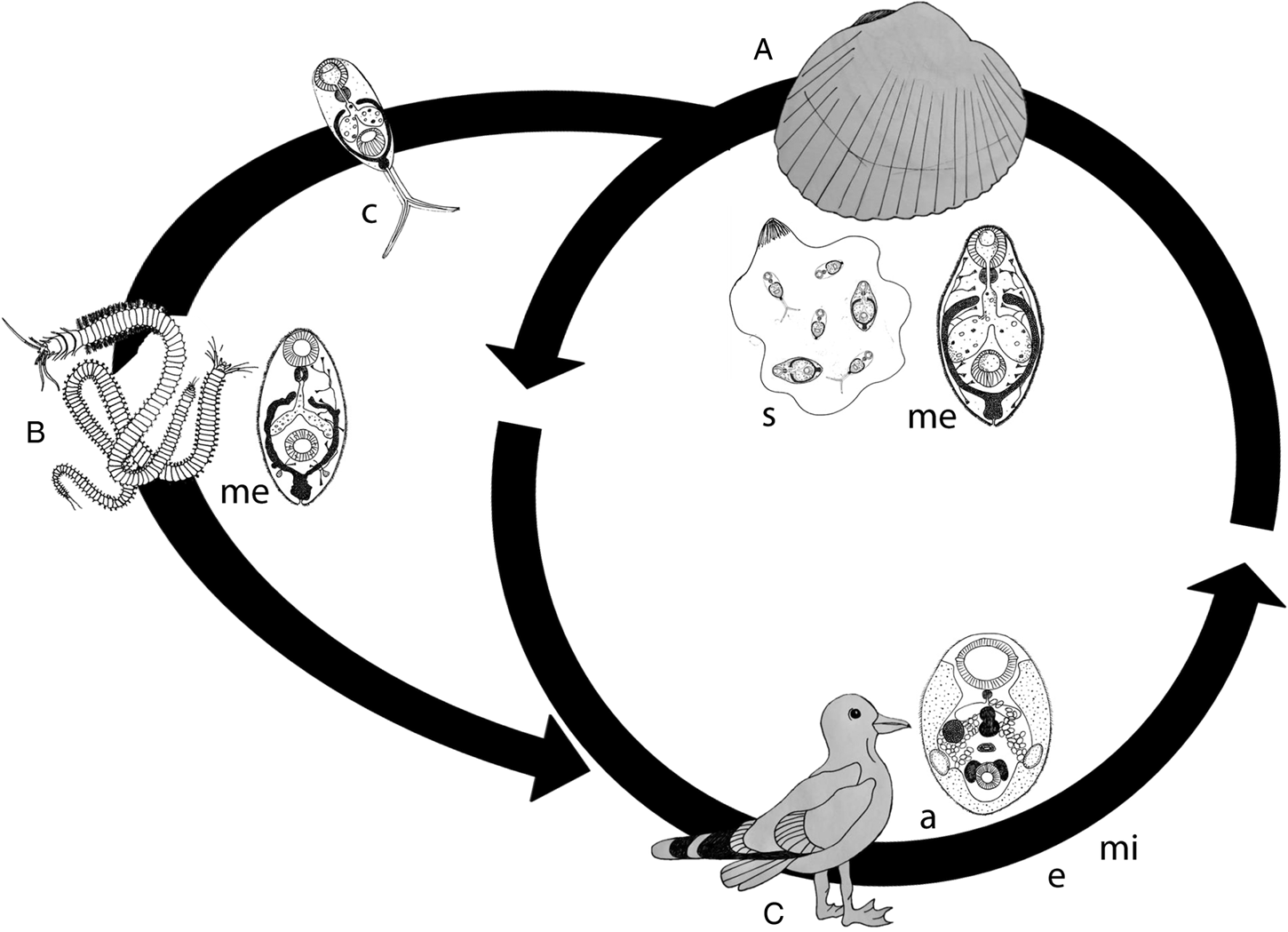
Parasites are ubiquitous and represent one of the major driving forces of the free-living world. Trematodes (Platyhelminthes) are one of the most prevalent and abundant macroparasites in coastal and transitional waters, with a complex life cycle. These parasites are frequently assigned to low pathogenicity and then often overlooked in ecological and conservation research. Nonetheless, depending on the trematode species, intensity, and, most importantly, the parasitic stage and subsequent interaction between the trematode and the host vital organs, a trematode can be extremely deleterious to its host, with known effects on reproduction, growth, biochemical performance, genetic structure, and survival. Trematodes can have a direct impact on ecosystem energy flow due to their high representativeness in community productivity and biomass. On the other hand, trematodes can have a dramatic indirect impact on ecosystem functioning as a result of sublethal infections with potential to induce changes on hosts functional roles (so-called trait-mediated-effects) through changes in their abundance (many are keystone species), behaviour, physiology, and morphology and likely cascading consequences for ecosystem. However, precise implications on ecosystem-level processes such as biomass or nutrient cycling are largely missing from eco-epidemiological theory and has rarely been experimentally explored, particularly in marine environments where inconsistent findings depend on the studied processes and host–parasite models used. As a result, the examination of the effects of trematode parasites in free-living community assemblages and consequences on ecosystem functioning and provided services will be the project’s key breakthrough finding by comparison with the current state-of-the-art. Common and highly prevalent parasites can finally be identified as an overlooked important driver of ecosystem-level processes, broadening the importance of parasites ecological role.